


.avif)

If pay rises solved employee disengagement, we wouldn’t be here
The retention problem pay can’t solve
73% of employees received a pay rise last year. Yet almost two fifths (39%) still plan to leave. For HR leaders, that’s more than a statistic. It’s a signal.
In a climate defined by budget pressure, AI disruption and workforce fatigue, traditional employee retention strategies are falling short. The Prezzee Employee Engagement Barometer, based on 2,000 UK employees, makes one thing clear: pay alone isn’t building loyalty.
Pay gets attention but appreciation earns employee loyalty
Compensation matters. But it’s no longer an effective employee retention strategy on its own.
Despite widespread salary increases, complacency is rising. 75% of employees describe themselves as complacent, and 64% say they feel bored at work. That’s not a payroll problem. It’s an employee engagement problem.
Employees told us exactly what’s missing. 38% say meaningful recognition from managers drives loyalty. And when rewards feel meaningful? 85% say it would increase their likelihood of staying, with 44% saying it would do so significantly.
Recognition isn’t “soft”. It’s strategic.
When people feel genuinely valued, employee engagement rises. Engaged employees perform better. High performers stay longer. Employee retention doesn’t start at payroll. It starts with how often people feel seen.
.avif)
The measurable lever HR can pull
HR leaders are under pressure to prove impact. The good news? Employee appreciation is measurable.
Our research shows that what makes rewards meaningful is deeply human:
- 54% say ‘feeling valued’ matters most.
- 35% want rewards to help them feel more connected to their company.
- 32% highlight uniqueness as key.
This is where HR has influence.
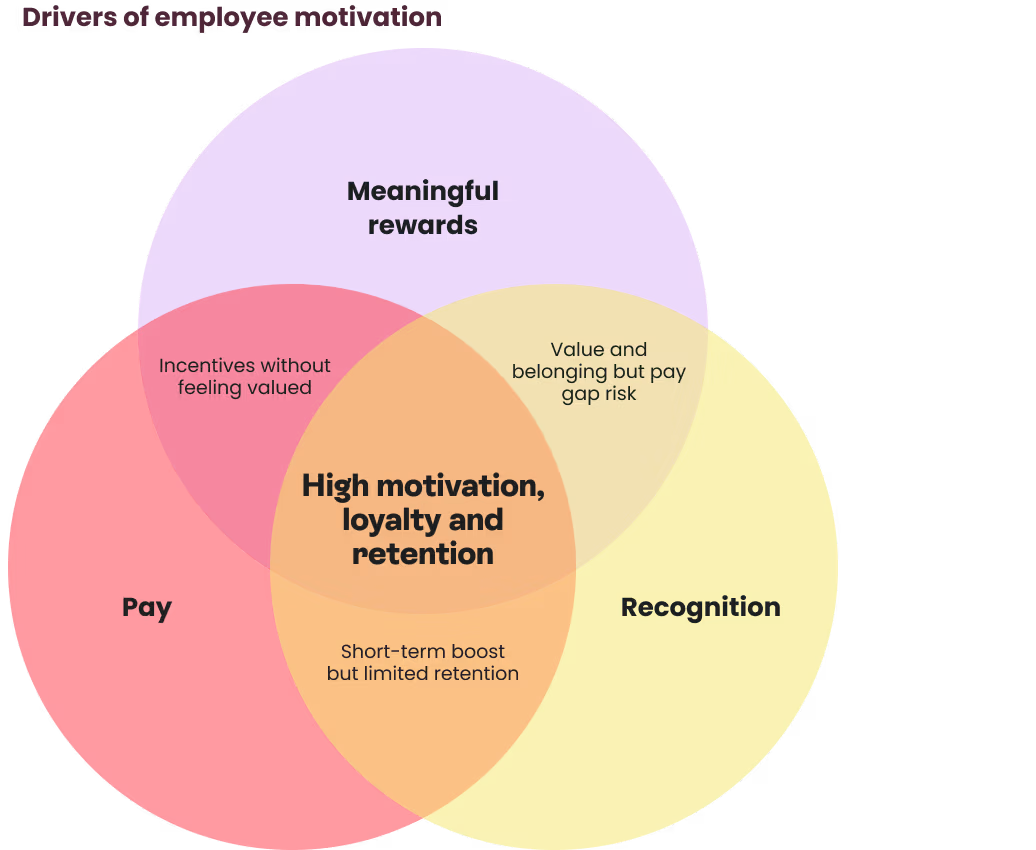
The organisations winning in 2026 won’t just be reviewing salary bands. They’ll be designing intentional cultures of recognition, consistent, personalised and aligned to company values.
Because when employee appreciation becomes visible and embedded into daily work life, engagement follows. And engagement drives the outcomes HR reports on: employee retention, performance and culture health.
If nearly 40% of your workforce is open to leaving despite pay rises, the question isn’t “Are we paying enough?”
It’s this: Are our people feeling valued or just paid?
Discover how to reduce employee disengagement with simple, meaningful gifting - book a demo today.